Alberta’s Bionic Revolution: When Technology Listens to the Mind
For decades, philosophy has wrestled with the mind-body problem. Are we simply consciousness operating biological machines? When the physical body breaks down, does the human spirit lose its agency in the world?
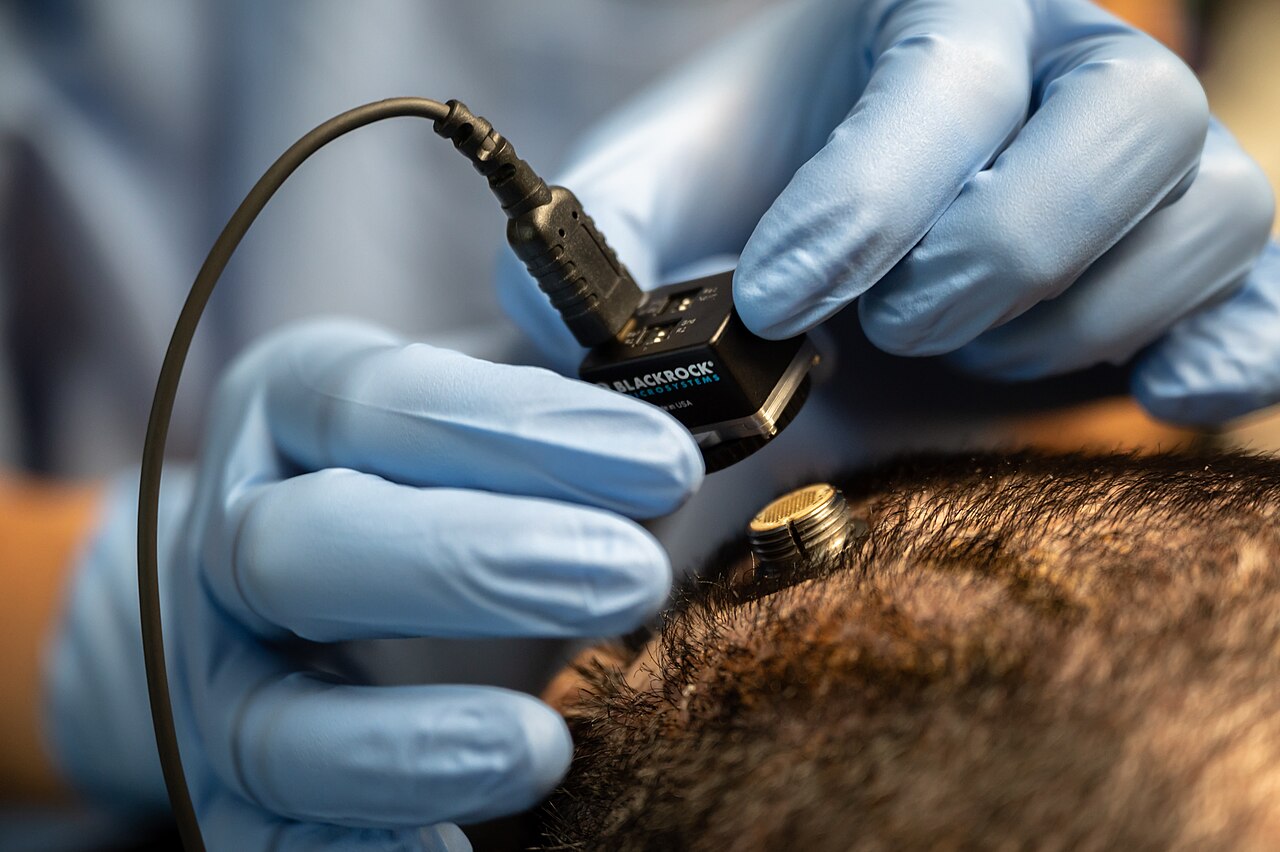
For Tristin Froma, a 19-year-old living with cerebral palsy, this is not an abstract debate. It is his lived reality. Yet at the Glenrose Rehabilitation Hospital in Edmonton, Tristin is experiencing something profound. Using a brain-computer interface (BCI) headset, he can drive his electric wheelchair without moving a single muscle.
“I love using BCI to move my wheelchair,” Tristin says. “It makes me feel free.”
Historically, medicine has focused on fixing the body. But a new movement in Alberta is exploring a different path: digital freedom. By translating brain signals into real-world action, researchers are proving that human agency is not strictly limited by biology.
The AI Co-Pilot: A New Kind of Partnership
At the center of this shift is the BLINC Lab at the University of Alberta. Here, researchers are redefining the relationship between humans and machines. Instead of building passive tools, they are developing intelligent partners.
Operating a robotic limb has traditionally been frustrating, often disconnecting users from their own movements. Dr. Patrick Pilarski, an AI researcher at the BLINC Lab, understands this challenge.
“They have a robot for an arm, but it’s really hard for them to tell it what to do.”
The solution goes beyond better hardware. It requires systems that can learn. Using reinforcement learning, these artificial limbs are trained to recognize patterns and anticipate human intent. If a user reaches for a cup, the system adjusts in real time, refining movement before the action is complete.
In this model, AI becomes a co-pilot, working alongside the user rather than waiting for instruction. As Pilarski explains, achieving seamless communication between humans and machines remains one of the most important challenges ahead.
Unlocking the World: The Agency of the Child
For children with severe mobility limitations, the ability to interact with their environment is essential to development. Without the ability to act, learning cause and effect becomes difficult.
This is where Think2Switch comes in, a device co-developed by the University of Alberta and the University of Calgary. It connects a BCI headset to simple, switch-enabled toys, allowing children to control objects using their thoughts.
Kim Adams, director of the Assistive Technology Lab, highlights the impact:
“For kids with limited mobility, being able to use their brain to turn on a toy is going to be a really valuable beginner tool… I think it will slowly open up the world to them.”
It is a simple concept with profound implications. For the first time, a child can directly influence their environment, building independence and a sense of self.
The Role of Philanthropy
Ideas like this only matter if they become real. Turning high-risk, innovative research into practical solutions requires significant investment.
Because early-stage neurotechnology challenges traditional approaches, it often falls outside the scope of standard funding. This is where philanthropy becomes essential.
The Calgary-based Branch Out Neurological Foundation is helping fund this work by supporting alternative and technology-driven approaches to neurological conditions. Their investments help bridge the gap between research and real-world application.
Support also extends beyond financial contributions. Community-driven events, such as the annual Branch Out Bike Tour, bring together volunteers and participants to raise funds and awareness for neurological research.
Similarly, the Glenrose Rehabilitation Hospital Foundation supports initiatives like the Imagination Centre, one of only three facilities in Canada using pediatric BCI technology. Donor support allows the hospital to invest in tools that enable children to play, create, and move using only their minds.
A Future Within Reach
We are entering a new kind of future. While medicine may not yet be able to reverse all forms of neurological damage, technology is already restoring something just as important: human agency.
Driven by researchers, patients, and community support, these innovations are changing what is possible. Technology is no longer just responding to the body, it is learning to respond to the mind.
And in doing so, it offers something powerful. Proof that the human spirit is not defined by physical limitations, and that with the right tools, it can still.
Written by: Kaloyan Krastnikov, Volunteer Contributing Writer, CharityAxess Writers Program
About the Writer: Kaloyan Krastnikov writes where rigorous thought meets lived feeling. With an approach that values clarity as much as curiosity, he transforms ideas about medical innovation and discovery into stories that illuminate, question, and console. In his free time he reads widely, tinkers with small data projects, and escapes into guitar playing and experimental cooking.
Photo Credit: By Mike Cai Chen